Monday, March 31, 2025

Insane or Misunderstood?


    In the 19th century, insane asylums were a new concept that evolved, creating a monumental shift towards the perception of mental illness and the medicine/treatments correlated with recovery. Insane asylums are also commonly known as "lunatic asylums", which acted as institutions that were established in order to better understand the mind of a "mad-man." This concept is one that many people are familiar with in modern society, adopting a more sensitive identification of psychiatric hospitals in today's world. Societal culture has constructed a very presumptuous idea about the common exposure of knowledge that molds people's perceptions about what these institutions were and how they were run. The reputation of these institutions proceeds itself, particularly in the 19th century--a time that marked the rise of experimental and methodical scientific curiosity fueled by medical inquiry (7). These institutions were placed all around the world and were horrific establishments that administered many inhumane procedures and treatments fueled by many misconceptions on mental illness and to what extent it was misunderstood. 

The Rise of Insane Asylums 

Though insane asylums weren't a new concept at the time, it was in the 19th century when they gained a lot more traction and popularity as a form of isolation from the mass population of society, and presented a new era of reform (7). Asylums were developed with the intent of providing care for those who can not care for themselves and to offer a wide range of support, community, and safety for those who found themselves in these unfortunate mental circumstances. Still, with the forced perception and persona of these institutions being something that is needed, "asylums were regarded as prisons disguised as hospitals" (6). Within the 19th century came extensive expansion over North America and Europe (7), similar in geographic terms as to where the institution is placed on Bram Stoker's novel, "Dracula." As the acceptance and demand for insane asylums grew, so did the need for physical space in order to fit the mass amounts of incoming patients. This growth was motivated legally as the County Asylum / Lunacy Act was passed that practically forced the obligation of admission of those with mental deficiencies. After the act was passed between the mid to late 1800s, close to 100 new asylums were built and opened (6). 

Treatments and Conditions

Trans-Allegheny Lunatic Asylum reasons for admission (8)
Treatments and conditions of these insane asylums are the main form of controversy surrounded by these institutions. When the normal everyday person thinks of insane asylums, their thoughts go straight to the inhumane, strict, and horrific methods of treatment and immoral perceptions of the patients there. Well-known treatments consist of lobotomies, electro-convulsive therapy, hydrotherapy, restraintment, confinement, and a plethora of other so called "cures" (3). Along with the appalling treatments, space within these institutions was scarce due to the continual admission of patients because of the rising popularity and accessibility. Sanitation was an afterthought within these institutions, again, due to the immense shift of continual enrollment and blatant apathy for the patients honest well being and genuine recovery (1). 


Admission of women has highly more common due to the weighted judgement and misogyny around this time period. Similar to the patriarchal structures in the novel "Dracula" with the women being perceived as either innocent and pure or insane and seductive. Some of the reasons for admission were valid such as loss of loved ones or abuse. But, women were often admitted purely on the insinuation of hysteria which was commonly correlated with menstrual cycles, uterine problems, nymphomania, or breaking through the expectations of women hood in this time period. These reasons were relatively subjective to the personal judgement of the one doing the admitting which was heavily and effortlessly abused. Women and men were strictly segregated in asylums and often times so segregated that they would be in completely different buildings. Patients were given jobs while they were there, men having more labor intensive outdoor jobs such as farming and women were being kept indoors to do laundry or employed in the needle room. As time went on, regimented days and employment began to relax and patients were encouraged to spend time outside because as research continued, scientists came to the conclusion that the environment in which you live has a heavy impact on your mental well being 
(6).  

Architectural Design

Kirkbride design blueprint of Trenton State Hospital 1848 (9)
The first large asylum was constructed in the 1800s as the traction of relieving the burden of the mentally ill people from their families and society grew in popularity, architects had no choice but to grow with the acceptance of these institutions. Dr. Thomas Story Kirkbride constructed a blueprint outline of the widely known presentation of asylums society portrays. The Kirkbride Plan evolved with the promotion of healthier and more humane treatments of the mentally ill by advocating for orderliness and exposure to nature (4). Constructing an environment that correlates with the treatments for patients plays an active role in the recovery process because patients feel more connected to their environment when they aren't feeling restricted or isolated. Humans are highly affected by the physical location they are exposed to, so when the architecture of the buildings started to conform to humanistic desires, there was seen to be an increase in patient recovery (2). These blueprints and designs were famous for their astounding size and emphasis on the subordinate approach to moral management. Structurally, this plan was designed for patients mental process progress by stressing natural light exposure, beautiful and rural views, along with better air circulation. 


Sources

(1) "A Victorian Mental Asylum." Science Museum, 2018, https://www.sciencemuseum.org.uk/objects-and-stories/medicine/victorian-mental-asylum. 

(2) Cooksey, Elizabeth C. "CONTAINING THE MAD: Moral Architecture and the Nineteenth-Century Asylum." Research in the Sociology of Health Care, EBSCOhost, vol.8, 1989, pp. 253-71.

(3) MacRae, Meghan. Horrifying Psychiatric Treatments From The Age of Reason. CVLT Nation, 2020, https://cvltnation.com/horrifying-psychiatric-treatments-from-the-age-of-reason/. 

(4) McElory, Ethan. The Buildings. Kirkbridge Buildings, https://www.kirkbridebuildings.com/buildings/. 

(5) Into the Shadows. "The Horrors of Historical Mental Asylums." YouTube, 2024, https://www.youtube.com/watch?v=h9bXornp-WA.  

(6) McBeath, VL. Victorian Era Lunatic Asylums. Historical Sagas and Mysteries, https://www.valmcbeath.com/books/the-ambition-destiny-series/. 

(7) Sims, Andrew C.P., Yudofsky, Stuart C., et all. Treatment of mental disorders, Britannica, 2025, https://www.britannica.com/science/mental-disorder/Treatment-of-mental-disorders.

(8) Reasons for Admission. 1800s, Trans-Allegheny Lunatic Asylum.

(9) Trenton State Hospital. 1848, Kirkbride Lithograph, https://en.wikipedia.org/wiki/Kirkbride_Plan#/media/File:Trenton_State_Hospital_-_Kirkbride_Lithograph_1848.jpg.


Bran Castle and It's Illusive History

Bran Castle  

By Julie Stapleton 

Bran Castle, Located in Bran Romania (4)

  Throughout the growth of literature and culture, specific works have become historical works of art. We can talk lightly about the hidden message in Jane Austen's Pride and Prejudice or the wittiness of F. Scott Fitzgerald's Gatsby. We can talk all day about small little mysteries that really pan out to the opinion of others or their perspective on things. However, nothing compares to the mysteries within Bran Castle's walls. The castle's very presence halts all matters of opinion and belief. It leaves people with the question of who Vlad Dracula was and why Bran Castle is so infamous. Here is its story. 

The Beginning

    The construction of this monument concluded in 1388, having been under construction for 11 years. When King Louis I of Hungary allowed the Transylvanian Saxons of the Brasov region to build a castle. The castle was put there to block the expansion of the Ottoman empire, basically acting as a fortress under the king's command. The castle bounced between numerous different leaders until it made its way to the House of Habsburg, which gained control of the region in 1687 and then declared that the castle was for the people of the region, not leaders from far away. With the locals now being its prime caregivers, the castle was serviced and kept up with as a fortress until the 1880s, falling into disrepair shortly after. (1) 

Potential Paranormal Activity

    The castle really couldn't be described as a place where royalty lounged in their thrones and every now and again came to say hello to the citizens down below it's majestic view. There were no grand balls or happy kings and Queens, and certainly no lone vampire counts, not until the 19th century. The idea of Bram Stocker's Dracula was created after Bram Stocker himself visited the castle and got the idea based on the history. The misconception that this is the home or the childhood home of Vlad Dracula, overwise known as Vlad The Impaler, is false. Two American paranormal investigators named Sam and Colby went on a tour through the castle while filming their series called "Hell Week," and ended up discovering multiple things about the castle itself. Their tour guide shows them numerous pieces of the castle's questionable history, including secret passages that lead to different floors of the castle, the monastery where Vlad the Impaler is rumored to be buried, even taking the voyage across the country to the spot where local legend says Dracula himself was beheaded. (2)

The Sam and Colby Video


    With the castle itself seeing an estimated 700 years of war, it is understandably said to have some ghostly encounters. Some disturbing questions have risen over recent years along the lines of torture and the sheer amount of bloodshed. This brought to light some of the classic Romanian traditions and local beliefs that are majorly unknown to the public. It is stated throughout many historical pieces that Romanians grew accustomed to burying their deceased family members like usual, but after a certain amount of time, they would uncover the dead and remove the heart from the body. This was believed to prevent or full-blown stop the believed inevitable of their loved one's dark spirit. This is called in Romania a "Strigoi," translating to "evil spirit." The entire legend of Dracula, the blood-seeking lone count that terrorized all who encountered him, is, of course, a myth. That myth, however, is rooted and completely based on real Romanian traditions and fears, like the one of the "Strigoi."(2)

    As officials and most locals have tried to rid this tradition from recent years, there are still many signs around the town surrounding the castle containing warnings like "Avoid walking around at night," and this is entirely due to the belief that the bloodshed the land of Bran Castle witnessed could harbor the negative energy of the feared "Strigoi." Bringing all of this knowledge with us as we uncover more about the castle really gives us a view of the local opinion of the castle and the superstitions around it. This also prepares us for the wrath this land saw from Vlad the Impaler before his execution. 

Important People


    Bran Castle was a place that had seen 650-700 years of war; it is impossible to put a number on how many lives were lost on that land. However, we can look at history and account for the fact that Vlad the Impaler is responsible for the lives of 80,000 people alone, mainly Turks and people brought to Wallachia as prisoners. This gruesome man never owned or lived in the castle, but he was imprisoned there for some time before Queen Marie's presence. (1)


Queen Marie of Romania. 
This portrait is located at the Maryhill Museum of Art. (6)


    Sam and Colby reported that in their time at the castle, they discovered that the castle had just within the last century, become a royal residence. Queen Marie of Romania of 1920 was gifted Bran Castle by the citizens. Reportedly, after Queen Marie passed away, they brought the remaining heart back to the castle because she wanted it to be known that this fortress was where her heart would forever stay. With her body being somewhere else and her heart supposedly staying in the castle, we can see this truly was just the custom of everyday Romania. (2)


The Secret Staircase

This staircase was discovered in Bran Castle in the 1920s. (8)

    No matter the extensive historical research done on the castle, more and more secrets are uncovered. Speaking of, during one of the summer stays of Queen Marie in the 1920s, restoration work was being done on the castle, and a secret staircase was revealed. The staircase led from the first floor to the third, with no entry to the second floor. This boggled historians, making them question what its purpose was and what it could possibly be used for. Eventually, historians came to understand that as the castle saw 700 years of bloodshed and war, this fortress of a building and its warlord inhabitants used this staircase in the event of an official needing to make a hasty exit in the case of invasion, battle, or desertion. (5)

Bram Stoker's Relevance
     When anyone in modern times hears the name "Dracula," they usually relate it back to Bram Stoker's fictional character, who is a vampire that spreads sheer fear and terror over England and Romania. Bram came up with this character after learning about Vlad the Impaler, former Voivode of Wallachia. (7) 
Rumors of the infamous Dracula have circulated for decades, but some stretch far beyond the level of local myth and legend. Vlad Dracula is said to be so vicious, he is responsible for the deaths of 80,000 men, women, and children. During his rampages and pillages, Vlad used the tactic of impalement by giant stakes, gifting him with the name we still fear to this day: Vlad the Impaler. Some misconceptions about Vlad start off with him routinely drinking the blood of his victims as they lay there impaled. This is false, as there is no historical evidence of Vlad drinking blood, but from his actions presented throughout his life, we can certainly say he was bloodthirsty. (2) It is also said that Vlad Dracula owned Bran Castle, but this is also false. He was merely imprisoned at Bran Castle for an undisclosed amount of time. The story of Vlad Dracula himself is what inspired Bram Stoker to write the novel Dracula.


Vlad Dracula III, Vlad the Impaler. (7)


Sources: 
1. Lewis, Robert. "Bran Castle". Encyclopedia Britannica, 29 Jan. 2025, https://www.britannica.com/topic/Bran-Castle. Accessed 31 March 2025.

2. Our Horrifying Night at Dracula's Castle. YouTube, Sam and Colby, 17 October 2021, https://www.youtube.com/watch?v=YVGwnroncDY. 

3. Lallanilla, Marc. “Vlad the Impaler: The Real Dracula Was Absolutely Vicious.” NBCNews.Com, NBCUniversal News Group, 31 Oct. 2013, www.nbcnews.com/sciencemain/vlad-impaler-real-dracula-was-absolutely-vicious-8c11505315.

4. Bran Castle. Bran, Romania. Photographer unknown. 

5. Google Arts and Culture. “7 Buildings with Secret Passages - Google Arts & Culture.” Google, Google, artsandculture.google.com/story/7-buildings-with-secret-passages/hAVx-7O0uEIORw?hl=en. Accessed 31 Mar. 2025.

6. Queen Marie of Romania in coronation robes. 1926. 35 Maryhill Museum Drive Goldendale, WA 98620.

7. Pallardy, Richard. “Vlad the Impaler.” Encyclopædia Britannica, Encyclopædia Britannica, inc., 18 Feb. 2025, www.britannica.com/biography/Vlad-the-Impaler.

8. Marina, Paul. “Bran Castle: What to Expect inside Dracula’s Castle in Romania.” Paulmarina, 27 Sept. 2024, paulmarina.com/bran-castle/.

19th Century Insane/Mental Asylums - Sydney Butters


19th Century Padded Room Interior.
Padded Cell, 19th Century (1)

Introduction and Conditions of 19th Century Asylums

In the 19th century insane asylums or mental asylums were much different than the modern day psychiatric hospitals. Not only were the asylums themselves very different but the forms of treatment, and the way mental health was dealt with is a far cry from medical practices now. These 19th century asylums were noted as by Science Museum UK: "a place of misery where inmates were locked up and left to the mercy of their keepers" (2). The treatment of the patients at these asylums was most definitely cruel even being put in restraints, and padded rooms to keep them from moving. This era of asylums was also one of the focal points of the iconic vampiric novel Dracula by Bram Stoker. The description above matches the seemingly unfortunate conditions of the character Renfield who was admitted to the asylum for his odd behavior. 

strait jacket, c.1930.
Strait Jacket, c.1930. (3)
Connections To Bram Stokers Dracula

As mentioned above padded rooms, restraints, and isolation were forms of treatment that were all used on Renfield throughout the novel of Dracula. This draws an obvious connection between the topics and puts into light how all patients not just Renfield were treated during the 19th century. Renfield was isolated, and restrained in a strait jacket much like the one pictured to the right. Renfield suffered from seemingly delusional thoughts, and in general erratic behavior as he eats bugs, birds, and even escaped the asylum at one point. This the raises the question does this violent and erratic behavior justify a patient being restrained? 

Forms of Treatment

Although the reasoning behind the restraints seems legitimate especially for violent behavior, they both
Replica of a leather restraint harness
Replica of a leather restraint harness 19th century (6).

were very isolating and constricting and not the right way to treat someone who is mentally ill. Despite it being so inhumane, isolation was a common way to treat patients in the 19th century as many psychiatrics thought according to Jessie Hewitt: "... mental patients had the greatest chance of regaining sanity when they were far from their relatives"(4). This meant keeping them away from everyone they cared about in a vulnerable, and difficult state after they were admitted to the asylum. Isolation however was not the only form of treatment used on patients at the time. Other forms of treatment were brutal Psychiatry online lists a few treatments like: "...static electricity, cold and hot baths, injections of testicular fluids..." (5) and many other inhumane treatment options. 

Asylum Reformation

Many would think the inhumane treatments came before any type of improvements, or mental asylum
"reformation." However, reformation of asylums did occur in the early 19th century, and with that came the development of  "the moral treatment" (4) The moral treatment according to Jessie Hewitt was: "...personalized and highly calculated interaction between doctors and patients." (4) This was very successful in treating the patients however with this amount of personal attention it could be hard to maintain with a growing amount of patients. Science Museum UK phrased the downfall of the "reformation" well by saying: "To some extent the Victorian asylums were victims of their own success" (2). They go on to explain that with the growing population in asylums it became hard to maintain this form of treatment. 

Final Thoughts

Because of the struggle to maintain humane treatment the asylums essentially reverted back to the old forms of treatment. The padded rooms, restraints, and "sedatives" were reimplemented into the now "overcrowded and poorly staffed county asylums" (2) This ultimately resorted in poor living conditions, and regression back to where mental health treatment started. Furthermore Renfield and many patients had to endure these ever-changing and inhumane conditions. To learn more about the harsh conditions of these asylum's see the video below by YouTube creator Into The Shadows (7) as it offers a more in- depth perspective into asylums of the 19th century. 


The Horrors of Historic Mental Asylums (7)

The History of the Late 1800's Typewriter


Sholes & Glidden's 1874
Typewriter Prototype (10)
For centuries, humans have gradually weaned off of putting pen to paper as their primary writing/printing method in virtue of extraordinary gadgets. This varies all the way from the mystique that is Henry Mill's invention he called the "Machine for Transcribing Letters" in 1714, to Pellegrino Turri's "Writing Machine" (1808), William Burt's "Typographer" (1829), and Rasmus Malling-Hansen's "Writing Ball". (7) All of these devices are considered to have inspired the iconic "Sholes & Glidden Typewriter" patented in 1868 by three ingenious men with ties to the newspaper industry. Considered to be the first commercially successful variant, it was collaboratively invented by two newspaper-editors, Christopher Latham Sholes and Carlos Glidden, alongside Samuel W. Soule, a printer/inventor whose "escapement mechanism" invention was inserted into the typewriter to regulate its mechanical movements. Soule, too, provided a majority of the financial support. (1) However, when patented, the three inventors were unable to sell their creation on their own. That was until the company Remington and sons (who mainly manufactured firearms) purchased the patent and production rights to the typewriter, in spite its infancy—and nearly six years later, they renamed the product to “the Remington Typewriter” which hit the sales market on a larger scale. Another half-decade had passed, and in 1878, the Remington Model 2 debuted, transcending the device with its groundbreaking addition, the shift key. For nearly a decade up to that point in time, typewriters could either print either only capital letters or lowercase, but there had never been a key that alternated between the two. (2) Endless revisions ensued, but this model was unequivocally a staple within the typewriter's legacy


Qwerty Sketch (4)
QWERTY

The peculiar formation of letters that make up the “qwerty keyboard” is ubiquitous in modern-day society, whomever types is well-accustomed to it. Students in schools countrywide are taught with it, it's on our laptops and smartphones, but why qwerty? There are several theories that swirl around to this day, but the consensus is Scholes invented this specific arrangement of letters was to mitigate typing errors and improve the speeds of the typists. The early days of the typewriter, though revolutionary, had a glut of flaws, most notably its tendency to jam if two keys were simultaneously pressed down, delaying the typing process. (5) It is theorized that Scholes tried to solve this problem by separating common letter pairings from each other (such as T and H, E and S, etc.), which would force users to type from row-to-row, as opposed to side-by-side on the same row. However, research suggests there may be even more to the story. Researchers from Kyoto University, Koichi Yasuoka and Motoko Yasuoka, believe the layout originated from the telegraph, which in turn tailored to the liking of Morse code readers. Another theory is that of a marketing strategy, as the word “typewriter” itself can be typed among just a single row, showing a sense of ease niftiness. (4) 

Fun fact: This blog was typed on a qwerty keyboard.


Twain and his daughter
using the typewriter in
Collier's Magazine, 1945 (8)

The Typewriter in 19th Century Literature

The Remington took the market by storm, much to the likes of writers whose manuscripts had solely been written by hand up to that point. Renowned American author Mark Twain was no different. It is believed that he is was one of the first major authors to ever purchase a typewriter. Twain purchased a Remington Typewriter for $125 (see picture above) in 1874 shortly after they hit the market. (8) In fact, his iconic novel The Adventures of Tom Sawyer was the first novel ever written on a typewriter. However, it wasn't entirely typewritten. Not even a year into owning one, he wrote an angry letter to the Remington company where he renounced his usage of the product as its faultiness made him want to swear. However, years later he revisited the machine, and published several pieces with the typewriter as it progressed. (9) The typewriter is mentioned within Bram Stokers famous novel "Dracula," (which takes place circa 1890). Mina Murray, a female character, plays the role of a schoolmistress, and with the drive to appease/help her husband with his writing, she expresses her desire to become a typist:

"I want to keep up with Jonathan’s studies, and I have been practicing shorthand very assiduously. When we are married I shall be able to be useful to Jonathan, and if I can stenograph well enough I can take down what he wants to say in this way and write it out for him on the typewriter, at which also I am practicing very hard. He and I sometimes write letters in shorthand, and he is keeping a stenographic journal of his travels abroad." (11)

This reflects not only the prevalence of typewriters around the turn of the 19th century, but their roles as vehicles for innovation among women in the workforce.


Listing for Western Electric
Manufacturing Company, 1873 (6
)

The Typewriter's Impact on Women in the 19th Century

The typewriter had a robust impact on women in the workplace in the late 1800's, possessing several empowering and limiting factors. Office work had mostly been dominated by men up to that point in time, but the introduction of the typewriter created an entirely new subset of office positions for women, primarily secretarial and clerical. This moved the needle where gender norms were concerned, opening the door for job opportunities beyond the "stay-at home" ones they were traditionally confined to. This empowered women in the sense that they were given a sense of independence in the workplace, as they earned their own wages, and eventually were in the gender majority where typists were concerned. It was considered to be a "female profession" as the task echoed feminine stereotypes that were neatness, delicacy, and savants of busywork. (6)
However, problems eventually arose, as the disparity in manual labor jobs between men and women persisted. While the typist position indeed provided a substantial job for women in the late 1800's, it eventually stifled them. The position had become so feminized, that typing became one of the only positions available. While it was a step in the right direction where equality was concerned, it eventually hit a wall. Job opportunities beyond sitting before a typewriter were minimal.


Sources

  • (1) HowStuffWorks. "How the Typewriter Works." HowStuffWorks, 15 Apr. 2020, https://science.howstuffworks.com/innovation/inventions/typewriter.html.

  • (2) "Typewriter." Encyclopaedia Britannica, Encyclopaedia Britannica, Inc., https://www.britannica.com/technology/typewriter.

  • (3) "The History of Typewriters." Back Then History, https://www.backthenhistory.com/articles/the-history-of-typewriters.

  • (4) Work Over Easy. "The History of the Typewriter: From the First Prototype to the Digital Age." Work Over Easy, 2 May 2017, https://www.workovereasy.com/2017/05/02/819/.

  • (5) "How Keyboard Creators Came Up with the QWERTY Layout." Typesy, https://www.typesy.com/how-keyboard-creators-came-up-with-the-qwerty-layout/#:~:text=Instead%20of%20figuring%20a%20way,upper%20and%20lower%20case%20letters.&text=The%20Dvorak%20layout%20was%20invented,tried%20an%20alternative%20keyboard%20layout.

  • (6) "History of the Typewriter." Typewriter, http://type-writer.org/?page_id=4705.

  • (7) "Who Invented the Typewriter? A Brief History of the Typewriter and Its Numerous Inventors." History Cooperative, https://historycooperative.org/who-invented-the-typewriter/.

  • (8) "World's First Ever Production Typewriter Sells for More Than £80,000." Daily Mail Online, 12 Nov. 2019, https://www.dailymail.co.uk/news/article-7662037/Worlds-production-typewriter-sells-80-000.html.

  • (9) "Mark Twain Wrote the First Book Ever Written With a Typewriter." Open Culture, 2 Oct. 2017, https://www.openculture.com/2017/10/mark-twain-wrote-the-first-book-ever-written-with-a-typewriter.html.

  • (10) "A Brief History of Keyboards." SlideShare, 2013, www.slideshare.net/slideshow/a-brief-history-of-keyboards/22430860.

  • (11) Stoker, Bram. Dracula. Edited by Nina Auerbach and David J. Skal, 3rd ed., Norton Critical Edition, 1997.


    The "New Woman" and It's Impact on the 19th Century

        Introduction 

    The 19th century was a historical time period that was known for a great social change within society. Specifically, the roles of gender in society began to shift and woman began to challenge the gender norms, taking on a more free-spirited mindset and independent lifestyle. These woman were recognized as "New Woman" and challenged the traditional Victorian Woman roles that society had previously expected of all woman to abide by. During this time period, literature novels such as Dracula, written by Bram Stoker, were written and published that shed light on this shift of gender norms embedded into the written text that also provides thoughtful insight into this historical topic. 


         History of the Victorian Woman 

    These Bell-Shaped dresses left woman restricted
                        to physical movement (4)


    Prior to the "New Woman" movement, there was the "Victorian Era" that all woman abided by.According to Merryn Allingham, both "men's and woman's roles became more sharply defined during the Victorian period" in comparison to any other historical time period (1). There was a clear distinction between careers, expectations, standards, and gender norms for both sexes. Particularly, woman during this area were recognized as more delicate, physically weaker, passive, and best suited to stay at home (1). Allingham also describes Victorian Woman during this time period to be "poorly educated and barred 
    from any form of higher education" (1). This often excluded woman from being able to participate in more active careers in the public and barricaded them from having any say in legal voting as well (1). Their main purpose and calling in society, at this point in time, was to be fully devoted to marriage and having children (1). It was very rare to see both sexes (men and woman) engage with one another, unless it was for breakfast and/or dinner, within the confinement's of their own homes. 


        Now... Introducing the "New Woman" Movement!

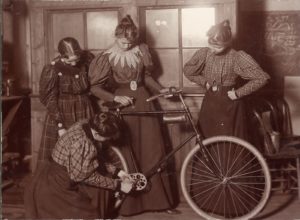
    As these great social shifts were occurring during the 1900's, the term "New Woman" took center stage to describe woman who broke away from the traditional Victorian woman standards. According to Ruth Bordin, the term "New Woman" described those that "exhibited an independent spirit" and who had a lot of "control over their own lives be it personal, social, or economic" (2). These woman were well and took on more active careers such as medicine  law (2). New Woman focused on maintaining independence and living a life that wasn't constricted to the desires of their husband or any male figure. Even physical appearances played a huge role in this social shift. Prior to the typical Victorian Woman appearance, New Woman were often found wearing shorter dresses and skirts (2). According to Loralee MacPike, New Woman were often seen riding bicycles, using slang, traveling, smoking cigarettes, and being sexually active (3). This was a very large shift from the typical Victorian era and its gender norms which focused heavily on woman staying indoors and devoting themselves to their husbands support. 


    Woman Repairing Bicycle, 1895 (4)
                                                       

    Representation of New Woman in Dracula 

    During this ideal feminist movement, many literature and written work were being published at the time and beginning to incorporate these gender concepts into their pieces. A strong example of a novel shedding light onto the New Woman ideology was Bram Stokers novel, Dracula. Lucy's character represents both the ideal Victorian Woman during her time as a human and then gradually shifts to inhibit New Woman traits as she takes on her vampire form. Her initial characterization at the beginning represented Victorian Woman traits as she is described as delicate and devoted to her husband Arthur (7). However subconsciously we learn about Lucy's sexual desires that break away from the typical gender norms at the time. In her own journal she questions why she can't marry three men at the same time (7). She then conveys the characteristics of a New Woman even more during her transition to becoming a vampire. Her intimate moments with Dracula expressed unconscious sexual desires to engage with other men that weren't her husband which defied the traditional gender roles at the time (6). It is important to recognize that Stoker described her new characteristics in a negative light and that the male characters to this shift in Lucy's behavior was filled with anger, referring to Lucy as a "monster" rather than the pure and delicate descriptions they had previously given her (6). Her character represents both the ideal Victorian Woman but also provides insight to unconscious desires that New Woman, during this time period, would convey as well (6). 

    Final Thoughts!

    The ideology of the New Woman and its feminist movement influenced an impactful shift in gender roles in the 1900s (2). Woman were seen to be more active and supporting themselves rather than relying on their husband. The typical Victorian Woman and its era slowly began to fade as this new ideology took place, empowering woman to explore their sexual desires and study career choices that were best suited for the public eye (2). However, this was not an easy shift and faced a lot of criticism to the public eye which is noted in Stokers novel, Dracula. The representation of Lucy's character shifting from the Victorian Woman characteristics to the New Woman characteristics were seen barbarous and viewed negatively by the male figures within the story. This corresponds to the criticism New Woman had faced in society when they were not living up to the expectations of pure and domestic behavior that others had wanted them to. However, these woman set the stage for independence and blurring the lines of masculinity and feminist expectations, empowering all woman to take a stand and explore their desires to support themselves and become educated. 


                                                                   Works Cited 

    1.  Allingham, Merryn. “Women in Victorian England.” Merryn Allingham, merrynallingham.com/19th- century/women-in-victorian-england/. Accessed 31 Mar. 2025.

    2. Bordin, Ruth Birgitta Anderson, excerpt from "Alice Freeman Palmer: the evolution of a new woman," Digital Public Library of America, 1993, https://dp.la/primary-source-sets/the-new-woman/sources/660

    3. Daumier, Honore. "Manière ingénieuse de décharger les toites". National Gallery of Art, 1801. 

    4. Jabour, Anya. “How Bicycles Liberated Women in Victorian America.” Commonplace, commonplace.online/article/how-bicycles-liberated-women-in-victorian-america/. Accessed 31 Mar. 2025. 

    5. MacPike, Loralee. “The New Woman, Childbearing, and the Reconstruction of Gender, 1880-1900.” NWSA Journal, vol. 1, no. 3, 1989, pp. 368–97. JSTOR, http://www.jstor.org/stable/4315921. Accessed 31 Mar. 2025.

    6. Nekhbet. “Lucy and Mina as ‘New Women.’” Monsters Madness, 30 Oct. 2018,             blogs.dickinson.edu/secretlives/2018/10/30/lucy-and-mina-as-new-women/.

    7. Stoker, Bram. Dracula. Archibald Constable and Company, 1897. 


    Contemporary to Dracula

                                      Contemporary to Dracula


    The Vampyre by John Polidori was published in 1819. Specifically in the Victorian era, this story had a major impact in the 19th century. This story was one of the first stories regarding vampires and had laid out the imagery of what a vampire was supposed to be as the Victorian fascination regarding the supernatural had begun to grow.


    Early Vampire Imagery: Shaping the Vampire in Pre-Dracula Literature 

    The worry Victorians had regarding disease, sexuality, death, and the fear of the unknown became represented in multiple stories that were created pre-Dracula. These stories focus on the physical representation of vampires and used to explore the supernatural and sexual desires that the vampire presented. The early works of these pieces contributed to the ground work of Stoker's novel as it is one of the most famous representations of a vampire. (1)


    The Evolution of the Vampire Archetype: From Folklore to Stoker's Dracula

    The vampire origin relates to old folktales and mythology, as each story relating to Dracula adapts a new trait of the character. The key early works, like John Polidori’s The Vampyre (1819), introduced the vampire archetype, and J. Sheridan Le Fanu’s Carmilla (1872), which expanded on themes of sexual attraction and vampirism. Both of these texts emphasize the development of the vampire and certain qualities, such as his charm or his seductive acts. Stoker’s novel expanded on the themes of immortality and fear of the foreign, which were prominent in Victorian society. (2)


     The Evolution of the Vampire Character

     The first notable literary vampire character, Lord Ruthven in John Polidori’s The Vampyre, contains traits of being noble, aggressive, and charming—qualities later seen in Count Dracula. Le Fanu’s novella introduced the idea of a female vampire and added themes of sexuality and forbidden desire, which we don't see a lot of in earlier versions of Dracula, and it shaped Stoker's story by adding a sexual element when introducing female characters. In the 19th century, the interest in the supernatural and death shaped vampire fiction.


    Lucy as described in Stoker's Dracula


    Sources


    (1) "The Evolution of Vampires in Popular Fiction." Speculative Chic, 6 Sept. 2016, https://speculativechic.com/2016/09/06/the-evolution-of-vampires-in-popular-fiction/.

    (2)"Books: First Vampire in Literature." MPR News, 12 Jan. 2016, https://www.mprnews.org/story/2016/01/12/books-first-vampire-in-literature.

    3)"Anatomy of the Victorian Vampire: Bodily Imaginings in Four Pre-Dracula Vampire Novels." Kutztown University Research Repository, https://research.library.kutztown.edu/cgi/viewcontent.cgi?article=1100&context=dracula-studies&utm_source=chatgpt.com.


    19th century insane asylums final draft-Isabel Boland

     Insane asylums in the 19th century 

    March 18th, 2025

    Image result for 19th century insane asylum
    Inside a 19th century asylum
    Life inside Victoria’s 19th-Century ‘lunatic’ Asylums

        Bram Stokers Dracula is a timeless novel published in 1897. Dracula tells the classic tale of Count Dracula and his strive to take over England, extending the blood curse throughout England. There are many themes throughout this novel. Some include sexuality, fear, and madness. Anne-Marie Finn described it best in her journal "Whose Dracula is it Anyway? Deane, Balderston and the "World Famous  famous Vampire Play" she stated, "Bram Stoker’s Dracula has accomplished something that almost no other novel has ever done: it has been thoroughly embraced by Western popular culture. From Halloween costumes to breakfast cereal, from books to movies, to a multitude of merchandise, “Dracula” is everywhere. The title is one of the most instantly recognized in the history of publishing and readily conjures up the image of a black-caped villain who preys upon members of an unsuspecting British society"(Finn Journal of Dracula studies).Within the novel, there are diary entries from certain crucial characters including Mina Harker, Lucy Westenra, and Dr. Seward, who works at Purfleet Asylum. Dr. Sewards diary entries often revolved around his patient Renfield, who we learn to have a connection to Dracula himself. 

        During this time, asylums where very prevalent for a number of reasons. During this time period, people did not have the same knowledge and ideas about mental health that we have now. Back then, being "mentally ill" meant you were to be isolated from everybody. Asylums a place to manage people who seemed as if they would be troublesome or dangerous to society. Even women who came across defiant or disobedient would be sent away to these institutions. People also believed that there was a spiritual aspect to mental illness. Some believed that people could be "cured" by prayer or a spiritual awakening. 

        Psychiatric wards and insane asylums were a mere way of trapping individuals who actually needed professional medical attention and care. most of these hospitals were equipped with instruments that could perform lobotomies as well as using shock therapy. These ways of "curing" patients only lead to more damage mentally and if not physically for some. Other treatments included hydrotherapy which would have the patients wrapped in sheets and bounded essentially were trapped or "mummified" while being submerged beneath the water. " Hydrotherapy proved to be a popular technique. Warm, or more commonly, cold water, allegedly reduced agitation, particularly for those experiencing manic episodes. People were either submerged in a bath for hours at a time, mummified in a wrapped “pack,” or sprayed with a deluge of shockingly cold water in showers (Fabian Talkspace). This method was seen as a way good solution to deal with patients that were going through "manic episodes" whereas in reality these patients were scared and being brutally tortured by those that were suppose to help them.  

        In Dracula, Dr. Sewards patient Reinfield is connected to Dracula. We think this because on multiple occasions Reinfield is seen collecting animals and consuming them. There are multiple instances where Reinfield gets treated like a patient in a typical 19th century asylum. Some of these moments include when Reinfield is being studied as a "curiosity" rather then having a psychological dive into what he actually has/what is wrong with him. We see this through 19th century insane asylums because they tended to have the same things happen with their patients. Often times patients would be seen as a curiosity or as a subject for them to study due to their conditions. Helping the patients in a deep psychological way was often rare and not a regular occurrence. Another time when he is treated like an asylum patient is when he was confined, and observed like they used to do in the 19th century. Another factor of this is the isolation that Reinfield received from the rest of the asylum. This tends to happen when patients are erratic, and considered 'mad'. This was a very common diagnosis in the 19th century, and it was treated by observation, confinement, and isolation. 


    Inside Nine Horrifying Insane Asylums Of Centuries Past
    Asylum patients
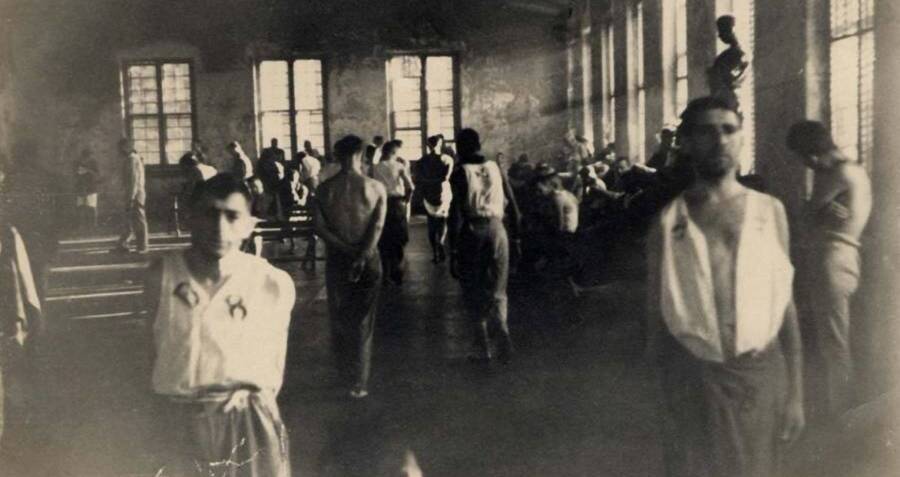
    Patients at the “violent ward” at Byberry Mental Hospital circa 1943. 


    sources:

    1. Fabian, Renee. “The History of Inhumane Mental Health Treatments.” Talkspace, 9 Mar. 2023, www.talkspace.com/blog/history-inhumane-mental-health-treatments/.

    2. “Madness, Morality, and Medicine: Life Inside Victorian Lunatic Asylums.” History Tools, www.historytools.org/stories/madness-morality-and-medicine-life-inside-victorian-lunatic-asylums. Accessed 30 Mar. 2025.

    3. “Journal of Dracula Studies.” Journal of Dracula Studies | Kutztown University, research.library.kutztown.edu/dracula-studies/. Accessed 30 Mar. 2025.

    4. Kamm, Rebecca. “Life inside Victoria’s 19th-Century ‘lunatic’ Asylums.” VICE, 27 July 2024, www.vice.com/en/article/life-inside-victorias-19th-century-lunatic-asylums/.

    5. Ishak, Natasha. “These 9 ‘insane Asylums’ from the 19th Century Are the Stuff of Nightmares.” All That’s Interesting, All That’s Interesting, 17 Aug. 2023, allthatsinteresting.com/insane-asylums/4.

    Maritime Travel in the 19th century

    *     The image of old-world sea travel is one that we are all familiar with at a glance. The wooden-hulled vessels and towering rigging lea...